A life in Naples
Francesco Mastriani (1819–1891) was one of the most prolific and widely read novelists of nineteenth-century Italy. Born and raised in Naples, he spent his career writing for the city’s popular press, producing serialised fiction that reached readers of every social class. His novels were adapted for the stage, reprinted across the peninsula, and read by the same audiences who were reshaping Italian literature in the years before and after unification.
Mastriani wrote in the tradition of popular realism that produced Eugène Sue’s Les Mystères de Paris and the great serial fiction of the century. His Naples, though, is distinctly his own: socially acute and morally charged. He depicted the city from the street upward, and the lives of the poor and the dispossessed with an attention that was unusual for the time. He wrote more than two hundred volumes across a career that spanned the years before and after Italian unification.
Despite his enormous popularity in Italy, his work has remained almost entirely unknown to English-language readers.
Mastriani in English
The English-language shelf of nineteenth-century Italian fiction is, to put it mildly, thin. The names that crossed over (Manzoni, Verga, a few others) did so decades ago, in translations that have grown remote from contemporary English. Mastriani never crossed over at all. A novelist read across Italy in his own lifetime, central to Naples’s literary identity, with a body of work running to hundreds of volumes, was simply absent from the catalogue.
The Espresso Mastriani programme begins with two of his most distinctive achievements: The Blind Woman of Sorrento, the early novel that became a touchstone of nineteenth-century Italian popular literature, and I Misteri di Napoli, the panoramic series he wrote in Naples’s unification years. Marta, or Faith, the first complete volume of that series, appears in English in September 2026. Idara Crespi translates both directly from the Italian and introduces each.
Idara Crespi writes about Mastriani’s absence from English translation in “The Long Silence: Francesco Mastriani in English Translation”, published by newitalianbooks (Treccani), June 2026.
The Mastriani catalogue
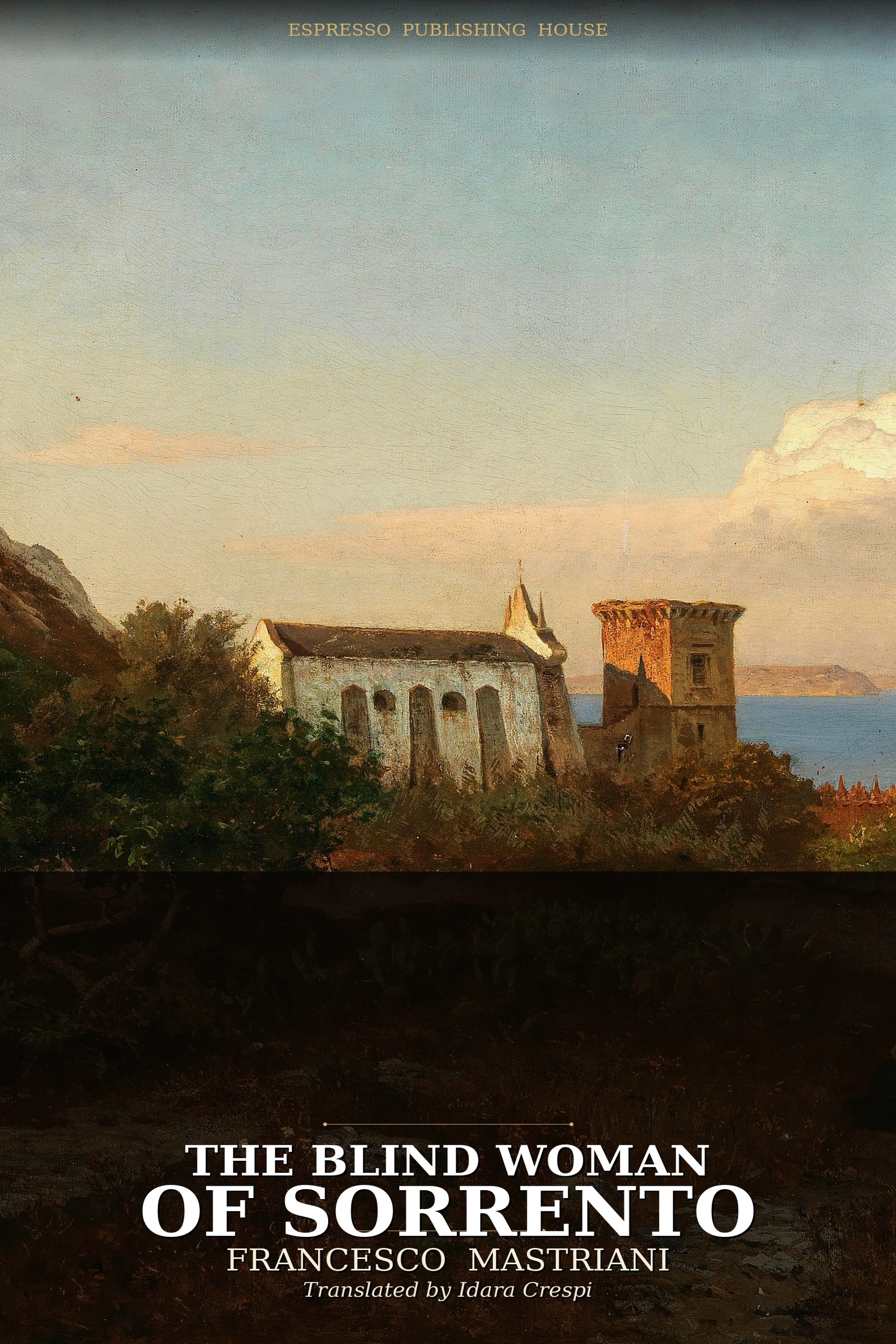
The Blind Woman of Sorrento
La Cieca di Sorrento · 1852
Translated and introduced by Idara Crespi
Kindle & Paperback
·
Published March 2026
La Cieca di Sorrento was one of the most widely read Italian novels of the nineteenth century: serialised, reprinted, staged as opera, and beloved by generations of Neapolitan readers. The novel turns on Gennariello, a young man of uncertain parentage raised in poverty, who falls in love with a blind woman of striking beauty. Their fate becomes entangled with the secrets of an aristocratic family: secrets involving identity, inheritance, and crime.
More about this edition →
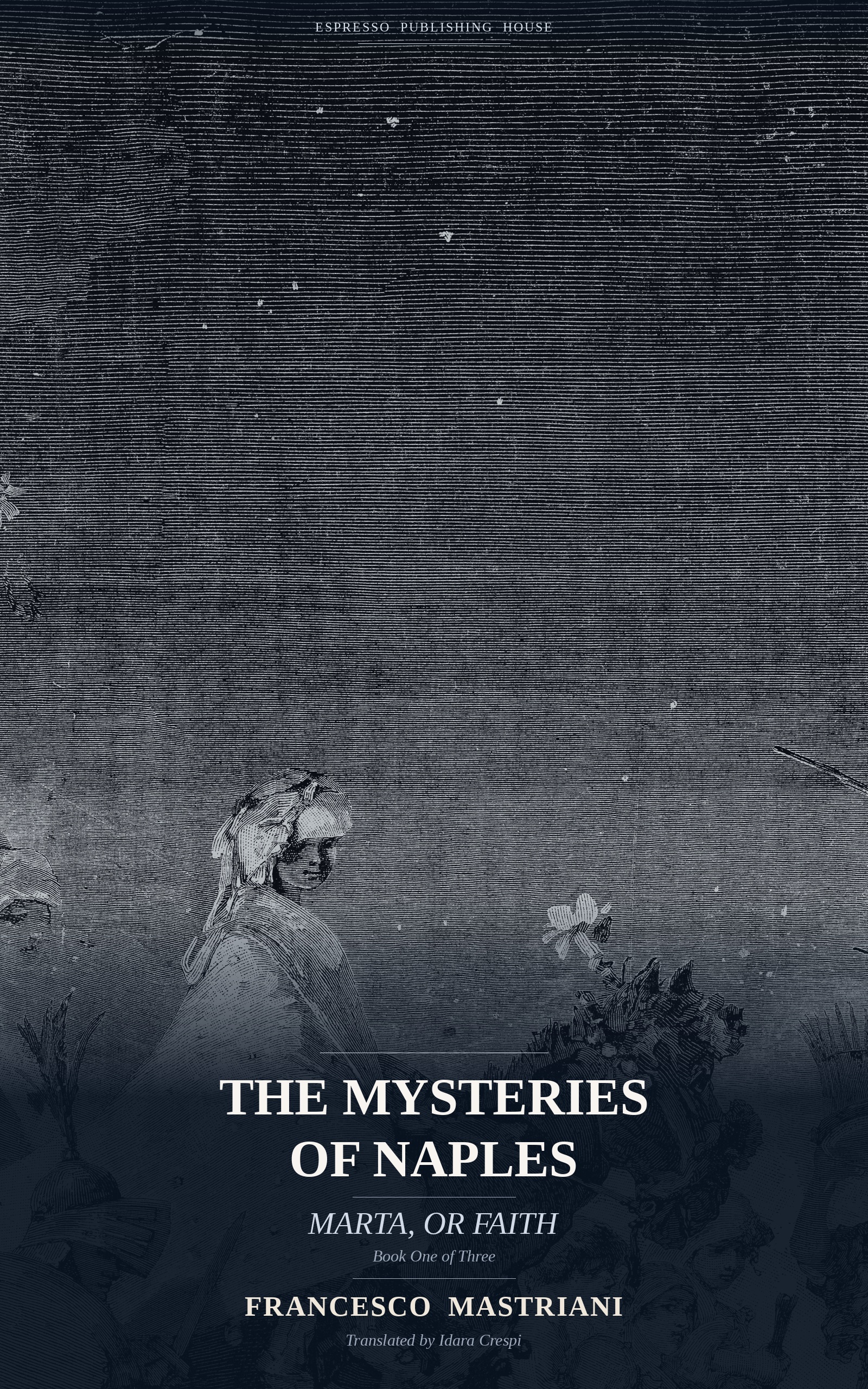
The Mysteries of Naples: Marta, or Faith
I Misteri di Napoli · Marta, o la fede · 1869–1875
Translated and introduced by Idara Crespi
Kindle pre-order live
·
Launches September 15, 2026
When Eugène Sue’s Les Mystères de Paris captivated Europe in the 1840s, it inspired writers across the continent to attempt their own versions: portraits of city life seen from below, tracing the lives of the poor alongside the powerful. In Naples, no one answered that challenge more ambitiously than Mastriani. I Misteri di Napoli is his most ambitious novel: a panoramic portrait of nineteenth-century Naples, running to hundreds of chapters. Marta, or Faith is the first complete volume, introducing a cast of characters whose stories unfold across the series.
This will be the first English translation of any volume of I Misteri di Napoli.
More about this edition →